
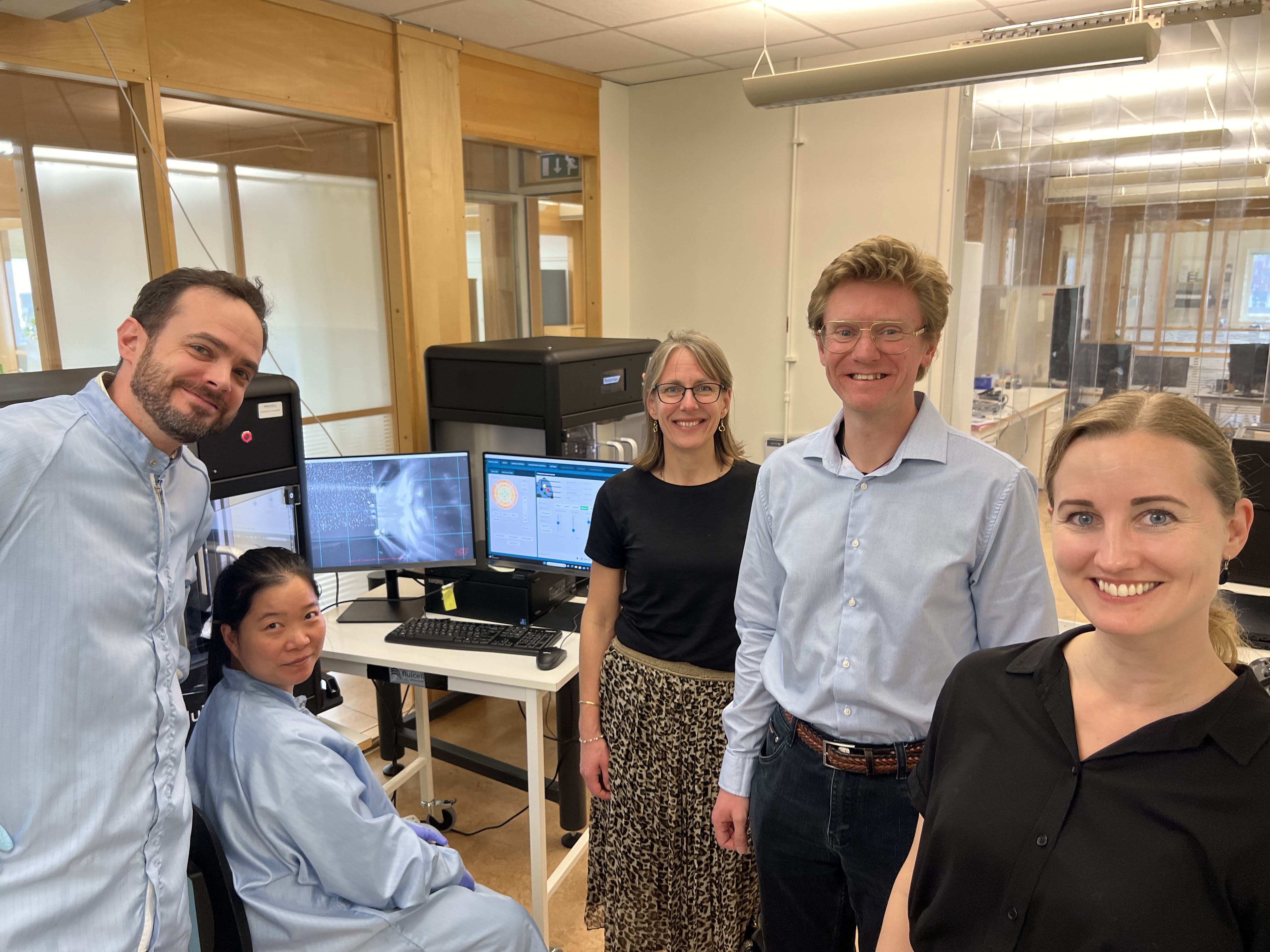
On October 18, the BIRDIE consortium gathered experts from academia, pharmaceutical industry and regulatory authorities to discuss how non-amimal reserch models can take the step from the lab bench of individual researchers to broad implementation in biomedical research and drug development. It was a day filled with many interesting insight into how to design and test different kind of organ and disease models, demands and wishes for use within pharmaceutical research, and the challenges associated with using non-animal models for preclinical testing.
Watch the full recorded workshop here. You can find the profiles for all the speackers below.
Speakers

Maria Tenje
Uppsala University
Dr. Maria Tenje is Professor at Uppsala University and leads the ENBLA research group, specializing in biomedical and life science applications based on advanced micro and nanofabrication methods and microfluidics. Maria has PhD in microtechnology from Technical University of Denmark (DTU) and joined Uppsala University in 2014. Her main research interests are micro- and nanofabrication, microfluidic systems for on-chip cell cultures, droplet microfluidics, acoustofluidics and organs-on-chip.

Camilla Svensson
Swedish Medical Products Agency
Dr. Camilla Svensson is Scientific Director in Pharmacology/Toxicology at the Swedish Medical Products Agency and member of the EMA 3R Working Party. Camilla has a background as researcher at the Dept of Pharmaceutical Biosciences at Uppsala University and holds a PhD from the same university.
Carlos Mota
Maastricht University / BIRDIE
Dr. Carlos Mota is an Assistant Professor in the Department of Complex Tissue Regeneration, MERLN Institute for Technology-inspired Regenerative Medicine, Maastricht University. Dr. Mota received his PhD in Biomaterials from the BIOS research doctorate school in Biomolecular Sciences at the University of Pisa, Italy, in March 2012. His doctoral studies were focused on the development of new approaches for the fabrication of polymeric scaffolds for Tissue Engineering applications. Currently, his main research interests are focused on bioprinting and additive manufacturing techniques for the development of tissue engineered constructs and in vitro models.

Silvia Mihăilă
Utrecht University
Dr. Silvia Mihăilă is an assistant professor of in vitro models of disease at the Department of Pharmacology of Utrecht University. Her work aims to develop humanized in vitro models to replicate pathological complications associated with kidney injury failure in the pursuit of unraveling mechanisms of disease and potential therapeutic targets Sivia holds a PhD degree from University of Minho in Portugal and continued her academic trajectory as a Marie Curie postdoc fellow at the Department of Urology of Radboud UMC where she used synthetic biomimetic matrix to stir the differentiation potential of stem cells, before starting assistant professor at Utrecht University.
Emelie Lassén
AstraZeneca
Dr. Emelie Lassén is Associate Principal Scientist at AstraZeneca, specializing in kidney disease. Emelie holds a PhD from the Institute of Neuroscience and Physiology at the University of Gothenburg. Before joining AstraZeneca, Emelie was postdoctoral fellow at the Icahn School of Medicine at Mount Sinai, where her research focus was intercellular crosstalk in the context of chronic kidney disease (CKD).

Philip Dalsbecker
AstraZeneca
Dr. Philip Dalsbecker is a postdoctoral fellow at AstraZenca, with research expertise in microfluidics and organ-on-chip technology. Philip has a master’s degree in physics from Lund University and a PhD degree from University of Gothenburg, focusing on microfluidic devices for liver-on-a-chip studies.
 BIRDIE Project Website