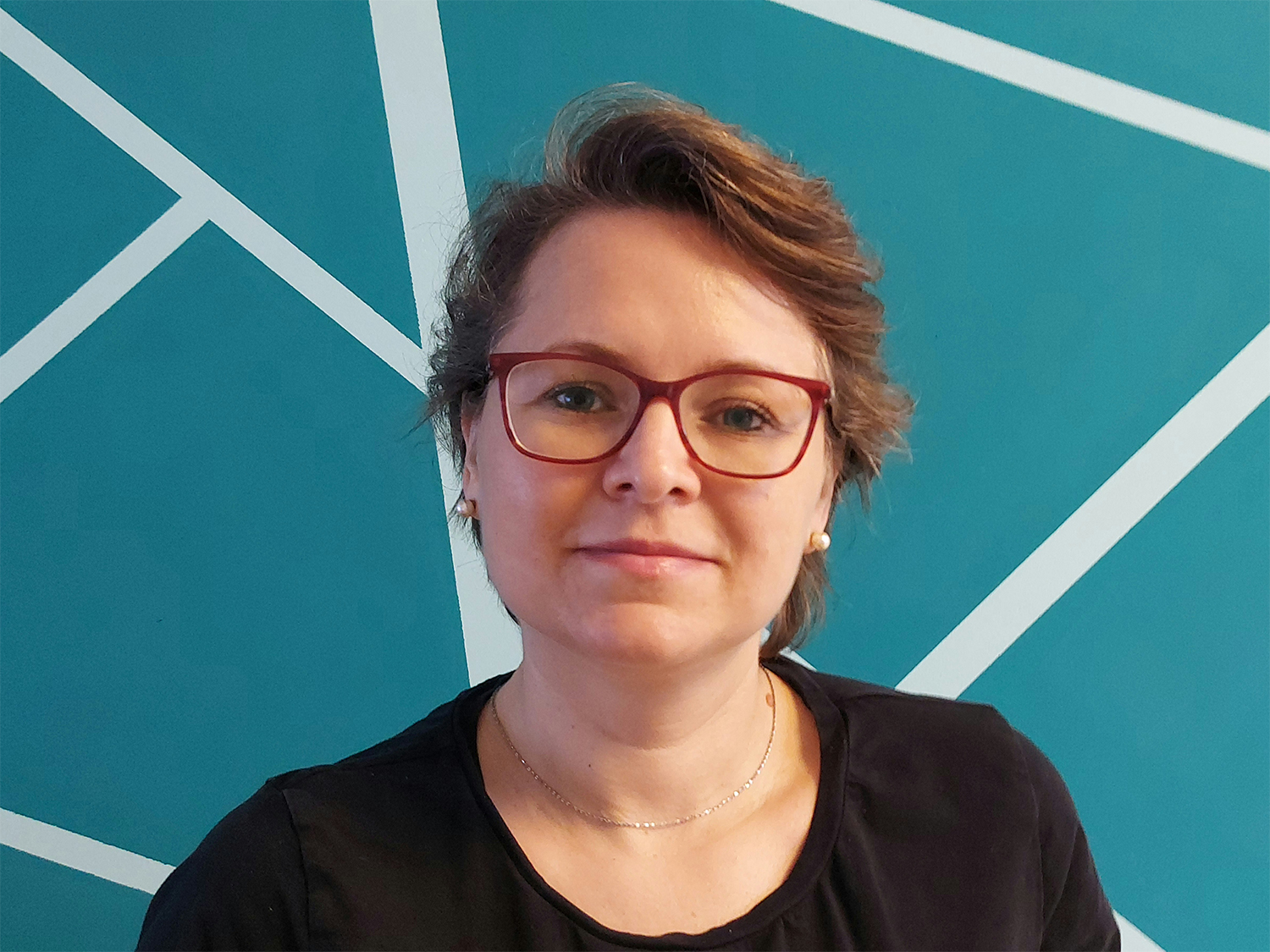
Aleksandra
Rak-Raszewska
Postdoctoral stem cell scientist with a long history of experimental research.
I am a stem cell biologist and postdoctoral scholar at Maastricht University. Before joining BIRDIE, I did a PhD at University of Liverpool where I studied mouse embryonic stem cells, working on methods to differentiate towards kidney cells. Later, I did a postdoc at University of Oulu in Finland where furthered my research into kidney function, including signaling during kidney development. With BIRDIE I see a great opportunity to apply my research experience towards human applications – taking us closer to solutions that can have an impact on human health and help patients living with kidney disease.
The collaborative aspect, where we establish an interplay between biology and technology, is what makes BIRDIE so intriguing.
A scientist right from the start
I was always curious as a child and perhaps asked way too many questions. I think I was five or six when I did what you could consider as my first research experiments. I think I had been in the park playing with friends and on my way home, I found dead frogs along the road. I collected the frogs and brought them home, washed and dried them. In total, I think I had something like 15 or 20 frogs, and I wanted to find out which one was biggest. My parents were probably terrified, but I remembered it as very funny, and I think this was the spark that made me eventually want to pursue a career as a scientist.
I also remember that I, a few years later, collected snails and created a small garden for them. When I got back home after school, I would measure how far they had traveled. I then put them back in their starting place and repeated the procedure the day after. What I found so appealing with this is that there were no predefined answers. You just went out there and discovered the truth. Although I have moved on from frogs and snails, I have tried to maintain the same curious mindset.
Finding solutions through collaboration
My role in BIRDIE is to develop bioprinting protocols that make it possible for the printed cells to mimic the native tissue development. A big challenge is to find the right cells and the right timing that lets them interact with each other in the right way. I work with Sveva and Francesca, my BIRDIE-colleagues here in Maastricht to find the sweet spot where the cells, materials and structures come together in the right way.
The collaborative aspect is one of the things that I think makes the BIRDIE project so intriguing. To achieve a successful model, we have to bring different fields together and establish an interplay between the living components and the technology influencing the cellular response. By bringing together stem cells, bioprinting and microfluidics, we can hopefully create an end -product that is really going towards personalized medicine that makes it possible to help specific patients with specific problems. Being able to aid others in this way is one of my main drives to go into science and there is still so much that remains to discover.
Immersed in the world of literature
Outside of doing research, I enjoy spending time and doing things with my family like going on trips, playing board games or going biking or trekking. But I also like quiet time by myself when I can sit down in my favorite chair with hot tea and a good book. Reading really lets me relax and allows me to take my mind off the daily worries. Most often I find myself reading things like horror novels, drama, thrillers and similar. Things that take you out of everyday life. Books really have the power to draw me in. I usually find myself thinking about books, trying to figure out what this or that character will do next. And if something different happens in the book, I get really involved.
 BIRDIE Project Website